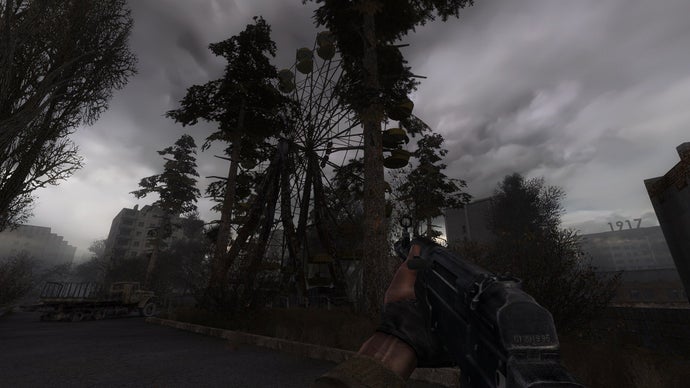
The gaming community has a long history of using genre names as derogatory labels, often othering games and developers in the process. Terms like JRPG, walking simulator, and Eurojank have all served as both descriptors and subtle insults over the years.
Andrii Verpakhovskyi, a key designer behind the original Stalker franchise, is pushing back against this tendency. He argues that categorizing ambitious yet flawed games by their developers’ geographic location is fundamentally unfair and unnecessarily limiting.
Eurojank typically refers to games crafted by European studios that feature innovative concepts but contain rough execution or technical shortcomings. While the term attempts to describe a legitimate phenomenon, Verpakhovskyi contends that geographical categorization of such qualities misses the mark.
His critique highlights a broader issue within gaming discourse: the tendency to use descriptive terms as dismissive labels. Similar patterns emerged with JRPG, which was historically wielded with derision despite accurately describing games from Japanese role-playing traditions. Walking simulator faced comparable criticism despite being a perfectly valid descriptor for narrative-driven exploration games.
Verpakhovskyi’s position suggests that ambition and imperfection are universal traits found across the industry, regardless of where developers are based. Rather than geofencing what some perceive as flawed game design to European studios, the industry might benefit from recognizing that creative risks and technical limitations exist globally among both independent and established developers.